

Ms. Tessa Marin – 01/02/2026
Novella City, Xeles, Novella Islands
Novellan National News Service
Exact and Minimum Specification rules released at midnight
The 2026 Technical Championship regulations were issued overnight by Novellan Motorsport, adding mandatory standardised telemetry sensors to Exact Specification entries, tightening Minimum Specification’s definition of aerodynamic devices, and confirming the return of the MinSpec+AI autonomous exhibition in September.
The rulebook runs to 946 pages (including appendices and amendment rationale explainers). Across workshops and offices, crews began downloading, printing, annotating, and arguing over the document, before starting the slow work of turning it into a build plan.
However, the page count is not the headline. The real story is that Novellan Motorsport has, once again, built one championship around two different questions.
In Exact Specification (ExactSpec), the question is: “can you build a perceptually flawless copy of the car you’ve been given, and then drive it to the edge of the envelope?”
In Minimum Specification (MinSpec), the question is: “can you build something that defies convention, make it safe, make it reliable, and then persuade everyone else it was obviously allowed all along?”
The two categories share a championship, but they reward different kinds of excellence. Where one is a contest of controlled execution, the other is a contest of controlled imagination.
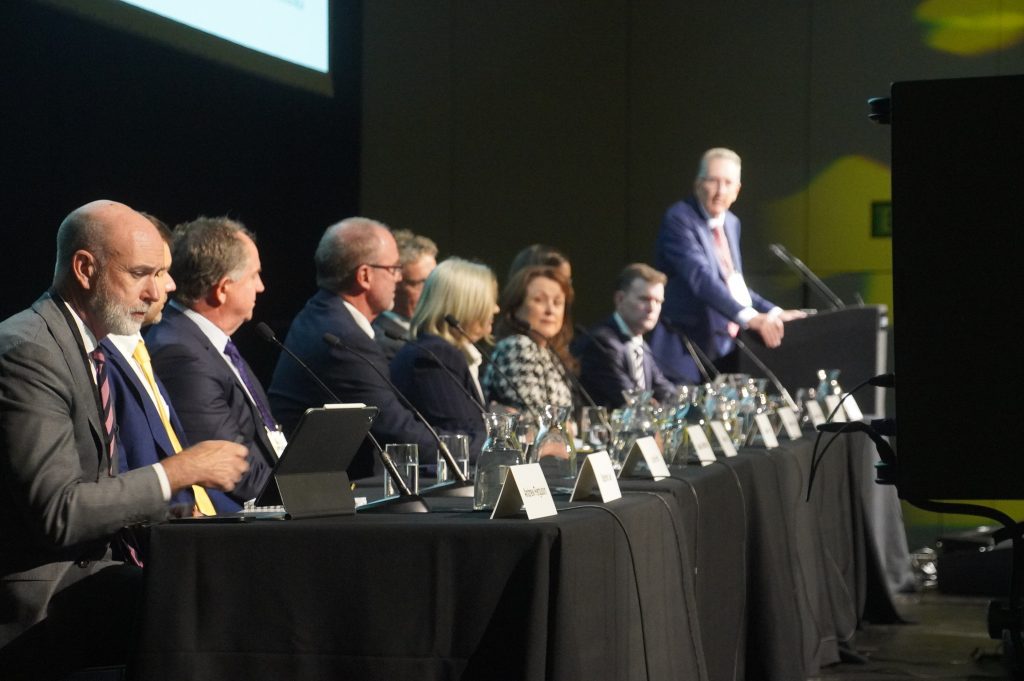
Mr. James Hart, a compliance lead with Novellan Motorsport’s scrutineering unit, said the first reading is always practical. “You start by finding where the book tells you how you’ll be checked,” he said. “That decides what you document, what you can repair at the circuit, and what you can’t afford to ‘sort out later’.”
The discipline of perfect copies
ExactSpec is often described as ‘mere spec racing’. It is not; at least, not in the way most spectators mean.
There is no physical ‘golden chassis’ kept under glass. The reference vehicle exists solely as a digitally signed master package, published online at midnight on the 1st of February (and distributed directly to entrants for convenience). It is theoretical by design, with geometry and tolerances defined in software, supported by the material briefs and compliance language that tell teams what ‘matching’ will mean when inspections begin.
Teams are not asked to buy identical parts from a central supplier. Instead, they must manufacture their own to the same reference, doing so repeatedly and provably, while ensuring that small deviations never accumulate into large consequences.
That is where ExactSpec becomes demanding. The reference package is entirely public, and there is little room to negotiate what ‘matching’ means. The pressure comes from the gap between file and physical world; process drift, repairs made under time pressure, and small tolerance stack-ups can turn a collection of compliant parts into a car that behaves inconsistently on track.
One senior mechanic, speaking on background, put it more plainly. “People think it’s easy because you’re not inventing anything,” he said. “But in this class, if you’re chasing a weird vibration all weekend, it’s not because the design is wrong. It’s because you built it wrong, by just enough.”
Drivers tend to be less philosophical. In a category with minimal setup latitude, they have fewer places to hide. If the baseline is fixed, then execution becomes pivotal.
Additional sensors now mandatory in ExactSpec
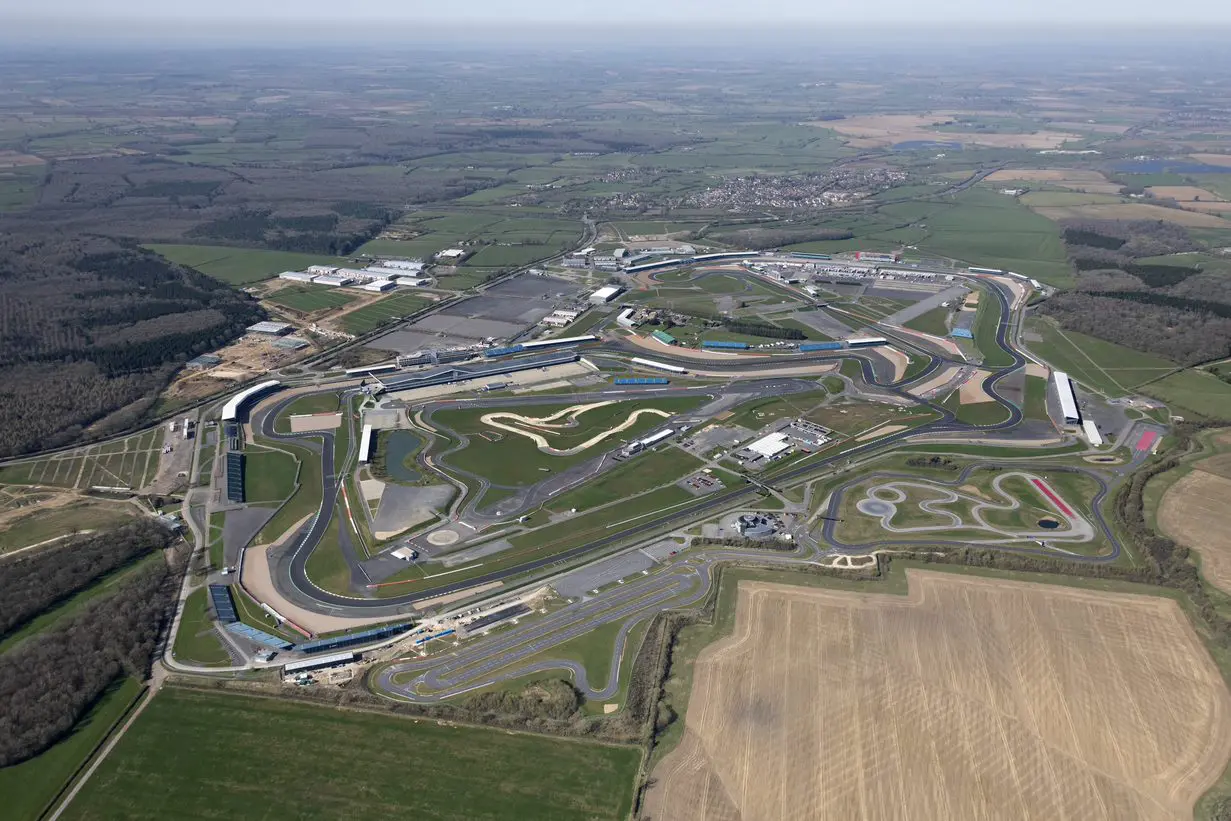
ExactSpec teams received confirmation overnight that a three‑sensor telemetry supplement (covering aero state, chassis attitude, and structural load) has been added to the 2026 design brief, reflecting a proposal raised publicly during January by the Novellan Institute of Science and Technology (NIST) team.
In ExactSpec, sensors are not treated as ‘performance parts’ in the usual sense. The intent is standardisation, both to improve safety monitoring and to ensure that, whether something goes wrong on track or during post-race inspection, the available evidence is comparable across the grid.
Ms. Ally Lang, a Team NIST representative, welcomed the change as a fairness measure. “In ExactSpec, differences come from execution and interpretation,” she said. “When the baseline data isn’t consistent, the advantage shifts toward whoever can argue best about what happened. Standardising the instrumentation narrows that space.”
Not all teams were enthusiastic, though few criticised the decision on record; their practical concerns are straightforward. Every extra component creates another potential failure point, with additional wiring paths, sealing and heat-protection challenges, and still more checks before a car is cleared to run. “This is just another place where the smallest failure becomes a did-not-finish,” lamented one senior engineer.
Conversely, drivers were broadly supportive, if for operational reasons rather than technical curiosity. Mr. Iain Boxer, Team Spirit’s junior driver, said the value is in faster diagnosis. “You don’t want a long debate when a session is getting away from you,” he said. “If the team can see what’s drifting early, you save tyres, you save the run plan, and sometimes you save the weekend.”
MinSpec’s ‘wing clause’ tightened, but not turned into a blueprint
MinSpec endures as the open engineering class. Its minimum rules remain intentionally few, limited to maximum dimensions, crash survivability requirements, a controlled tyre interface, and broad safety and logistical guardrails. Vehicles must not derive performance from intentional loss of ground contact, and internal combustion must be the principal (though not necessarily sole) method of locomotion.
Beyond that, MinSpec permits what ExactSpec forbids, with freedom in architecture decisions, systems choices, and the ability for a team to pursue a concept because it believes in it, not because a committee agreed to it.
That freedom is why MinSpec’s most sensitive issue this January was also one of the simplest to describe to the public: wings.
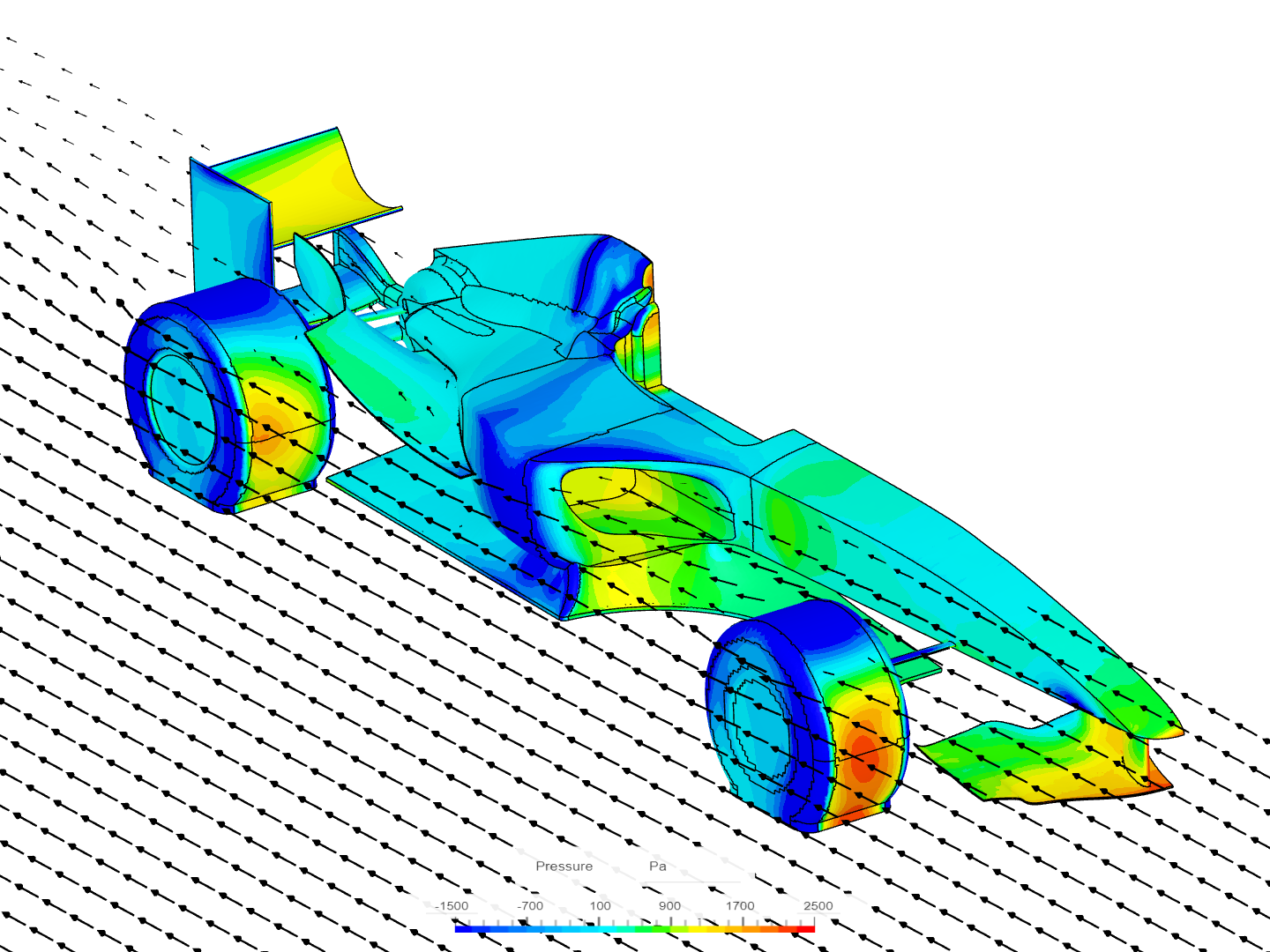
The final rulebook does not impose a single prescribed wing geometry, as some entrants had advocated. Instead, it tightens the language around what constitutes an aerodynamic device, and clarifies the permissible envelope for wings and related elements. In practical terms, the revised wording treats any bodywork whose primary purpose is downforce as an aerodynamic device, regardless of what a team calls it.
Mr. Leon Harrow, a member of the drafting group convened by Novellan Motorsport, said the intent was to reduce repeat arguments, not to narrow innovation. “We’re not trying to turn MinSpec into ExactSpec,” he said. “We’re trying to stop the same dispute returning every second weekend under a different name.”
This year, the wing debate has been difficult to separate from one team’s competitive position, and from a safety concern Novellan Motorsport appears unwilling to treat as theoretical.
Clover’s composite advantage
Team Clover – an alliance of four high‑spec engineering firms, including Novellan Ballistics – arrives as the reigning MinSpec champion, after debuting a novel composite wing solution late last season.
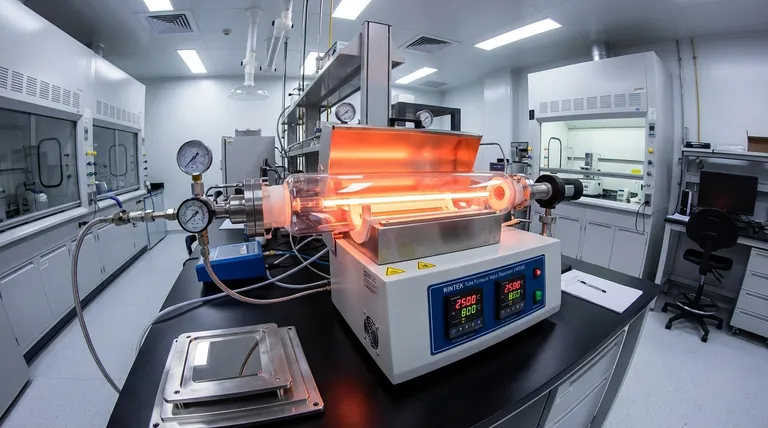
Rival engineers describe it as a material that does not simply reduce weight, but enables shapes older composite approaches struggle to manufacture reliably or sustain under load, without unacceptable thickness or deformation.
Under Novellan intellectual property practice, exclusivity is treated as a short initial window (the Initial Exclusivity Period), after which disclosure becomes the default. In motorsport, ‘publication’ is defined by first sanctioned track use; once a concept is run in public, its six‑month clock starts. At expiry, the entire recipe is disclosed in full, released into the public domain as a complete research paper.
The timing now sits uncomfortably inside the design‑build‑test window. With the ruleset fixed and the first Technical Championship round not until July, teams face a sequencing problem: wait and risk compressing redesign and validation, or commit early and accept the likelihood of starting the season behind a known advantage.
Dr. Philip Irwin, Team Clover’s chief engineer, said the final wing wording was workable. “We can build inside it,” he said. “The problem with vague wording isn’t that it allows innovation. It’s that it creates uncertainty about what you’re allowed to bring to a race.”
However, several figures in the paddock pointed to the principal driver of the rule change being safety, not competition.
According to a scrutineering safety report circulated to entrants after post-season testing, the same extreme geometries that unlock performance can also produce a brittle failure mode in certain composite configurations. As a result, shattering rather than deforming is observed when pushed beyond benign shapes or when impacted; at race speed, shattering is not a technical footnote. This debris becomes a threat, not just to impacted drivers, but to marshals and to following cars with nowhere to go.
In that reading, the tightened envelope is less about neutralising Clover’s advantage than about signalling that, while MinSpec may be open, it must not be sharp.
‘MinSpec+AI’ exhibition to return
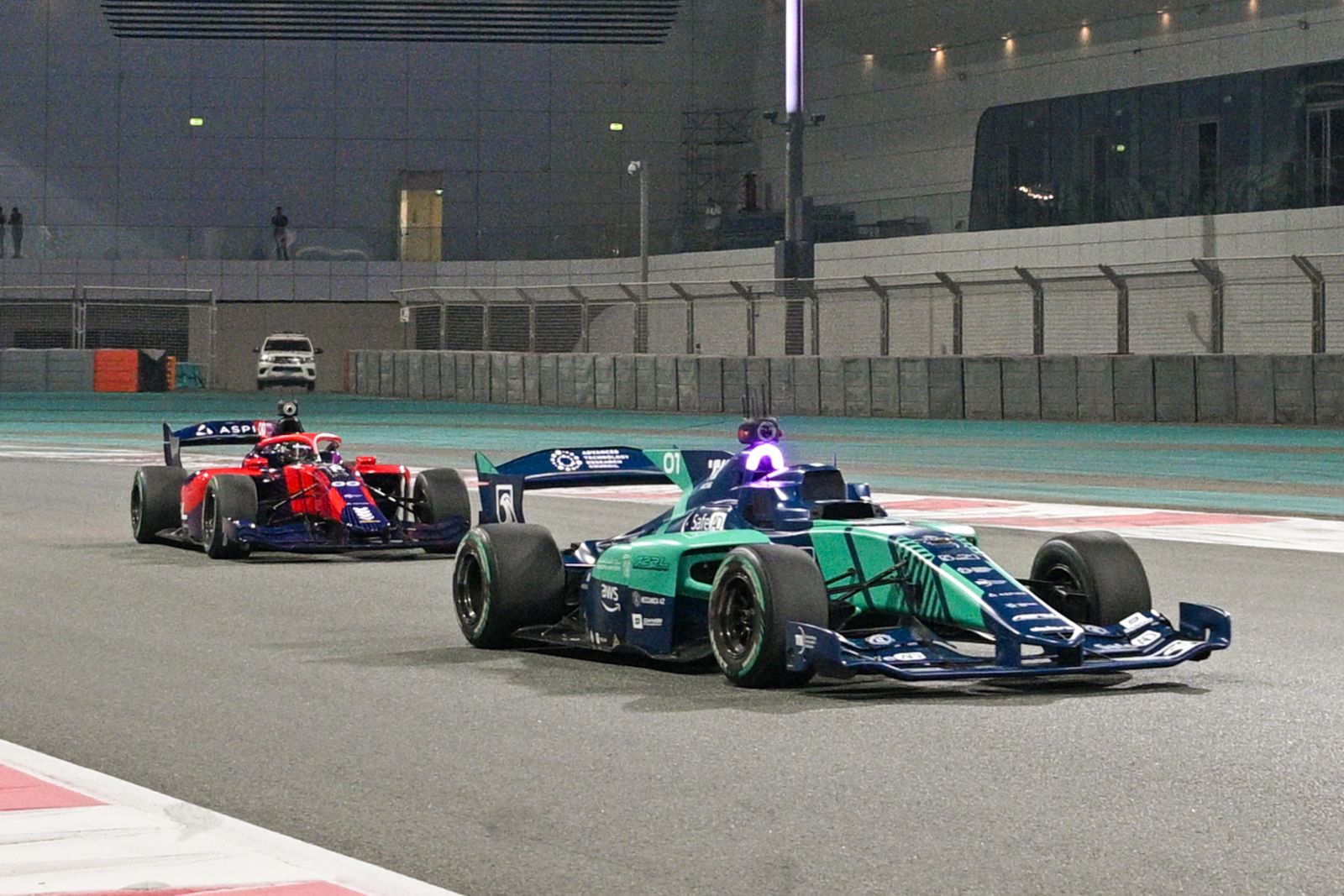
Unsurprisingly, under the 2026 rules issued overnight, MinSpec once again requires a human driver, leaving closed the loophole that in 2022 allowed Team Lattice – a collaboration including the National Software Corporation – to enter a fully autonomous car under a ruleset that did not explicitly require a person in the cockpit.
The entry did not win the championship, but it did not finish last. This was more than enough of an impetus to force a clarification in subsequent rulebooks, and to sustain public appetite for a dedicated driverless format.
Novellan Motorsport has confirmed that the MinSpec+AI demonstration races will return in September, after not being run last year. The event will be contested as a stand‑alone, non‑championship format and will not form part of the main MinSpec title standings. The exhibition will feature ten fully autonomous cars; after the start procedure, pit-to-car strategy communication will be prohibited, with only race-control safety directives and mandated telemetry uplinks remaining.
Chief Steward Mr. Marcus Lyle has previously described the original episode as embarrassing, but instructive. “Engineers will read what is written, not what was intended,” he said. “That’s not a criticism. That’s the job.”
As drafters rest, the winter season ends on track
While design offices digest the Technical Championship text, elsewhere on Novellan Motorsport’s calendar, race engineers and drivers are preparing for the final race of the Winter arm of the Stock Series.
The Stock Series remains the most publicly legible of Novellan Motorsport’s programs, featuring off-the-line vehicles – ranging from high-performance production models to hypercars – with only minimal modifications. The series is as much a reputational exercise as a sporting one. Manufacturers whose cars are selected provide the vehicles and second a tuning engineer to each team, ensuring the platform is represented properly and cannot be disowned if it disappoints.
Mr. Peter Collins, motorsport liaison for Advanced Motor Works, said the model is intentionally hands‑on. “If we put a car in the program, we don’t get to pretend it wasn’t set up right and walk away,” he said. “The point is that the public sees the platform pushed properly, by serious people.”
Drivers often put the same idea more bluntly.
Mr. Luke Harris, driving in the Winter finale for Team NIST, said the Stock format has its own pressure. “In the Technical Championship, you can tell yourself you lost because someone built something smarter,” he said. “In Stock, if you’re slow, it’s usually you – or the set‑up – and everyone can see it.”
As for the Technical Championship, with publication now complete, teams begin the build phase. The races will come later; the engineering has already started.
