
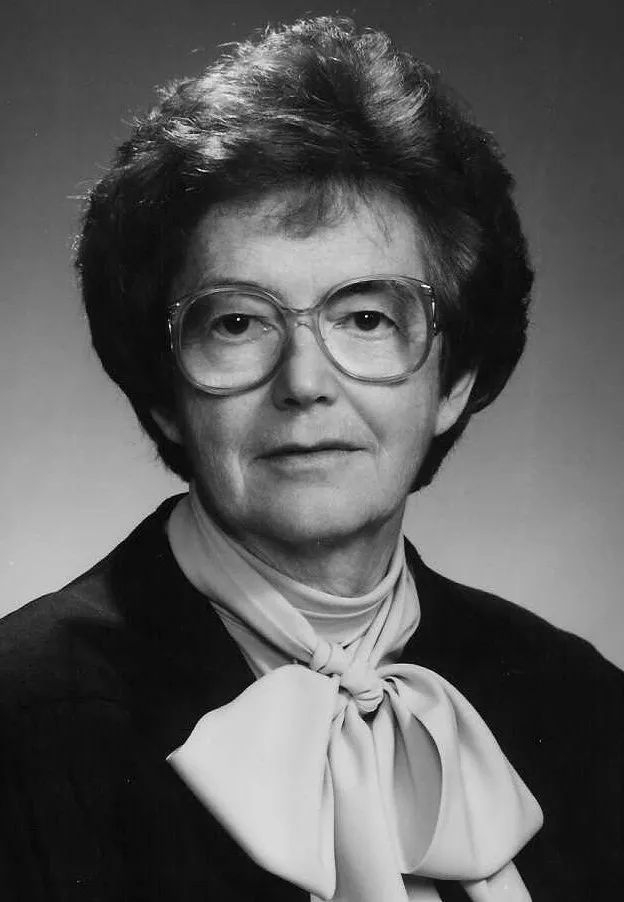
Sanctus – Associate Justice of the Supreme Court, Joyce Keenahan, died peacefully today after a short illness, the Supreme Court announced this evening. Keenahan, who was the Senior Associate Justice and longest-serving member of the current court, was 81. She was predeceased by her husband, Donald, and one of her children, Mary-Ann. She is survived by her children Lawrence and Judy, and several grandchildren.
Keenahan, born in Sanctus, attended the Sanctus Acadamy of Law as one of few women in her class. She wrote that after graduation in the late 60s, she struggled to find work as “not many reputable law firms were interested in hiring what they saw as emotional and volatile women”. After spending some time as a legal clerk in the Acadamy of Law itself, she was hired as one of the first female public defenders in the new Divine Republic of Sanctaria, partly because of her gender; she said in an interview in 2002 that “they gave me the cases with runaways and orphans, alcoholic fathers and forgetful mothers – I had the women’s touch, or so they thought”. After spending time in the 70s and 80s working criminal cases, she was called to the bench as a circuit court judge in 1984.
When Glen Cox became Prime Minister in December of 1993, he promised to put a woman on the Supreme Court. Less than a month later, in January 1994, he fulfilled that promise, nominating Keenahan to fill a newly vacated spot. A tough confirmation followed, with many parliamentarians probing how she felt personally about divorce, abortion, contraception, and menstruation – topics, she felt, wouldn’t have necessarily been asked to male nominees. Despite pushing through and being confirmed as the nation’s first female Associate Justice, she hated the title and insisted people not use it to refer to her – “I am a woman, yes, I was the first woman to be made an Associate Justice, yes, but that’s not my title. My title is Associate Justice. I rule in cases based on the law, not based on the fact I am a woman. How I feel about case law or criminal law or administrative law is irrelevant to my sex and gender. The fact it’ll be mentioned in my legacy rather than important cases that came before us bothers me beyond measure.”
And important cases she did indeed take part in. In Selwyn v The Secretary of State for Home Affairs, Justice, and Equality, Keenahan wrote the opinion that declared yes, marital rape was rape. She was on the bench when it decided that corporations did not have personhood and vastly curtailed their campaign finance contribution rights. In 1997, Keenahan was accused of setting women’s rights back decades when she wrote the Supreme Court’s opinion in The City of Haven v The Attorney General that Haven City Council had the right not to promote a woman because she was pregnant; the ruling was later overturned in 2003 in a separate case before the court.
Keenahan came under scrutiny in August last year when she insisted she would not be retiring, despite turning 80 and facing some health challenges; Keenahan had twice battled breast cancer in the last decade, though refused to take any leaves of absence, dealing with treatment around oral hearings in the courtroom. It is understood that the latest, and last, illness that she faced was unrelated to her previous cancer-related diagnoses.
Justice Secretary Noah Cameron tonight passed on the Government’s condolences, saying both he and Chancellor Greer had reached out to Keenahan’s family personally, and that Keenahan “will be missed both in the courtroom, and in public life”. Her fellow Supreme Court justices will likely acknowledge her loss, and honour her legacy, at the beginning of the upcoming Court term which begins on 01 October with a traditional Mass.
LOUISA SOUTER, Crime & Justice Correspondent


