

Mr. Edmund Carver – 06/04/2026
Heiwakyō, Heiwakyō Special District, Hanafleura
The Times of Opthelia
Governor Wescott proclaims the Transitional Constitutional Instrument of the Protectorate of Hanafleura
Today, Governor David Wescott proclaimed the commencement of the Transitional Period in the Protectorate of Hanafleura. The decree was published in the official gazette of the Protectorate this morning, as required by the Transitional Constitutional Instrument of the Protectorate of Hanafleura, enacted under the Imperial Seal on the 2nd of April. It brings the new constitution into full legal force, and initiates a ninety-nine-year process by which the people of Hanafleura will progressively assume the competences of autonomous administration, within a framework established by Her Imperial Majesty Empress Athena II.
The Instrument itself is a document of considerable constitutional ambition. Its preamble affirms the Empire’s recognition that the people of Hanafleura are “entitled to the progressive assumption of self-governance”, and it does so without equivocation. Sovereignty vests in the Empress, and is delegated to Governor Wescott at the outset, but the ninety-nine-year framework is designed to give way to Hanafleuran administration in four stages of devolution. The arrangement is characteristic of Empress Athena II’s settled preference for the rule of law; aspirational in its long-term intent, and precise in its immediate architecture.
The legislature of the Protectorate – the Hanafleuran Deliberative Assembly – is to be constituted not by election in the conventional sense, but drawn by lot from a Civic Register of qualified residents. The Instrument’s preamble commends this as the arrangement that “best realises the ideal of governance as a civic responsibility held in common, rather than a prize contested by competing factions”. It is a model that departs markedly from the electoral traditions of many member states of the Opthelian Commonwealth – the Novella Islands’ sortition-selected National Civic Council being among the few comparable institutions, though it exercises an advisory rather than legislative function – and has attracted considerable interest from constitutional scholars across the international community. The territorial districts from which the lot shall be drawn are to be designated by the Governor, announced within ninety days of today.
The constitution was enacted at the Imperial Palace in Eddington, countersigned by the Minister for Colonial Affairs Mr. Steven Wallace, by Governor Wescott on behalf of the people of Hanafleura, and by Lieutenant-Governor Yuta Watanabe. English has been established as the language of administration of the Protectorate; the Hanafleuran language is recognised, and is to be supported in civic life by the institutions of the Protectorate. The territorial capital is to be designated by the Governor by proclamation in the days ahead, although it is expected to remain the existing colonial capital of Heiwakyō.
The Instrument will remain in force until superseded by the outcome of an independence referendum, to be convened in the final years of the Transitional Period. At that point, a Final Deliberative Assembly of 150 members will determine Hanafleura’s future status. Should independence be the outcome, it will arrive with a Security Partnership Treaty already in place, to be negotiated between the Empire and the Protectorate from Year 60. The treaty negotiation provision ensures that the conclusion of the Transitional Period will arrive with the architecture of a durable relationship already in place.
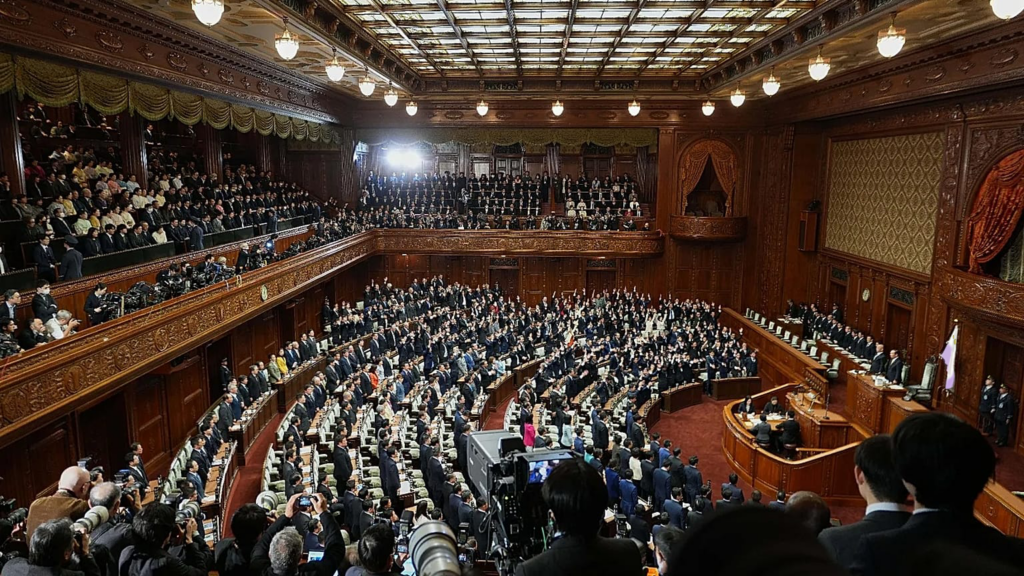
Both Governor Wescott and Lieutenant-Governor Watanabe addressed those gathered at the formal commencement ceremony. Mr. Wescott described the proclamation as “the beginning of a long period of work ahead”, and expressed confidence that the institutions of the Protectorate would prove equal to it. Mr. Watanabe, addressing the small crowd of Hanafleuran residents gathered for the occasion, spoke of the Transitional Period as a gift extended to a people whose potential had long outpaced the institutions available to realise it. “Today,” he said, “Hanafleura begins on its path, to become what it always had the capacity to be.”
Her Imperial Majesty was not present in Hanafleura for the occasion, having discharged her constitutional obligations through the Instrument of Enactment late last week. Officials at the Imperial Palace confirmed that the Empress received word of the proclamation’s successful publication and commencement with satisfaction.
